
From Scissors to Screens
Remember the simple joy of cutting out paper dolls from magazines, carefully peeling away tiny tabs to dress your miniature companion? That tactile childhood ritual has transformed into today’s vibrant world of virtual paper dolls and digital fashion playgrounds. Dress-up games have evolved from quiet analog hobbies into one of the most creative and enduring genres in casual gaming, particularly resonating with girls, artistic teens, and niche communities across generations. As dolldivine.com documents, what began with carefully cut paper tabs has blossomed into infinite scrolls of pastel avatars and sophisticated fashion simulators.
The dress-up games history reveals a fascinating trajectory that mirrors technological advancement while maintaining its core appeal: the freedom to experiment with identity through clothing. In the early 2000s, sites like GirlsGoGames reportedly drew 20 million monthly visits from users craving digital fashion experiences. As fashion writer Nicolaia Rips recounts in Vogue, these games were “a free space for the mind to wander without judgement or approval from others. They had no plot, no competition, no tête-à-tête with other fans, just endless options to toggle between.”
Today’s online dress-up trends are experiencing a massive resurgence, fueled by digital fashion nostalgia and the metaverse movement. Platforms like Picrew and Meiker have breathed new life into the genre, while Y2K aesthetics have brought back memories of pixel-perfect DollzMania avatars. This journey from 19th-century Victorian paper dolls to today’s AI-enhanced creators isn’t just about technological progress—it’s about our timeless human desire to explore identity, express creativity, and play with possibility through fashion. Let’s trace how these seemingly simple games became cultural touchstones that shaped how we understand style, identity, and self-expression in the digital age.
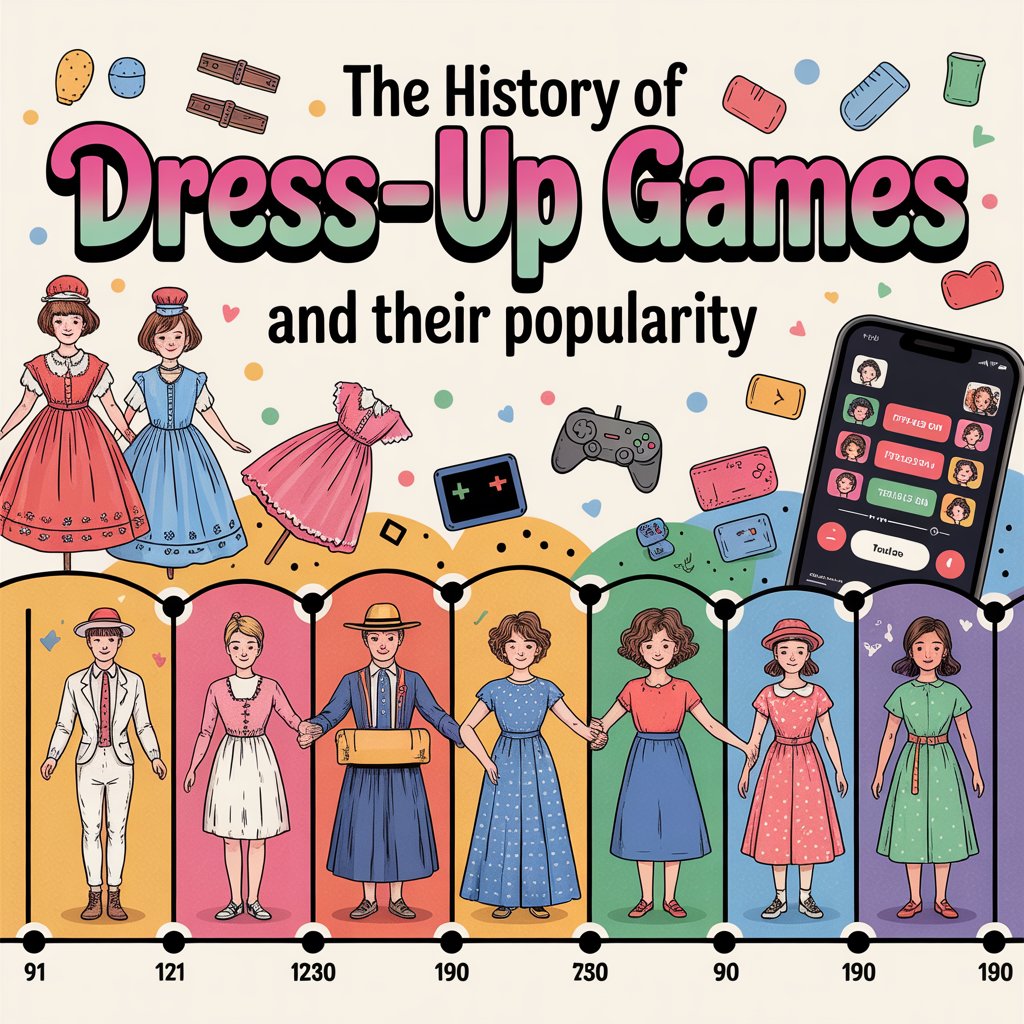
Origins in Paper Dolls: Fashion Education Through Play
Long before digital screens illuminated our lives, paper dolls served as both entertainment and subtle educators in fashion and social norms. The dress-up games history begins surprisingly early—commercial paper dolls appeared as far back as 1810 in London with The Pretty and Amusing Little Fanny Book, followed by Boston’s Little Henry in 1812. These weren’t mere toys; they were carefully crafted lessons in propriety and style for young girls of the Victorian era.
By the 1830s, paper dolls had evolved into celebrity culture tools, featuring figures like ballerina Marie Taglioni and even Queen Victoria herself. As dolldivine.com notes, these dolls weren’t just playthings but “sophisticated toys likely belonging to a young girl” that “suggest the existence of storytelling and gender training through play.” Fashion magazines soon recognized their educational potential—Harper’s Bazaar began including paper dolls in 1867, while The Delineator (a precursor to McCall’s) featured them prominently as early as 1898.
The early 20th century saw paper dolls become mainstream cultural artifacts:
- 1909: Johnny Gruelle’s Kewpie dolls transitioned from paper to 3D, becoming one of America’s first mass-marketed toy lines
- 1915: Raggedy Ann paper dolls introduced wholesome Americana style
- 1920s-1940s: Paper dolls reflected changing social roles, with flapper styles giving way to wartime utility fashions
- 1950s-1960s: Television stars like Howdy Doody and Davy Crockett inspired paper doll lines
The historical fashion simulators truly hit their stride with artist Tom Tierney in the 1970s, who created over 350 paper doll books featuring everything from ancient Egyptians to modern celebrities. His work transformed paper dolls from children’s playthings into serious historical fashion simulators that taught fashion history through hands-on engagement. As Wikipedia confirms, paper dolls “have enjoyed great popularity around the world, as they are relatively cheap to produce, yet still offer a rich, dress up experience.”
These paper predecessors were more than just cutouts—they were pixel dollz precursors that taught generations about textiles, silhouettes, and cultural aesthetics. Each carefully cut tab represented a lesson in garment construction, while the changing styles across decades documented fashion’s evolution. For many young girls, these paper dolls provided their first exposure to fashion as a creative discipline rather than mere consumption—a foundation that would later translate seamlessly into digital formats when technology caught up with imagination.
Digital Dawn: 1990s Pixel Dollz and KiSS Revolution
As the internet began connecting households in the mid-1990s, the quiet world of paper dolls exploded into vibrant digital communities. The dress-up games history took a quantum leap with Japan’s innovative Kisekae Set System (KiSS)—a groundbreaking digital dress-up platform that allowed users to drag and drop clothing onto manga-styled characters. Unlike static paper dolls, KiSS introduced interactivity through early digital technology, letting users create endless outfit combinations with a few mouse clicks.
Simultaneously, a grassroots movement was taking shape across Western internet communities. On platforms like The Palace Chat Program, users began creating pixel dollz—small, pixel-art GIF images that served as customizable avatars. As Wikipedia explains, the invention of dollz is attributed to Melicia Greenwood (known online as artgrrl), who created detailed bald and naked base bodies that others could customize with hair, clothes, and accessories. Within weeks of her creations appearing on The Palace’s “Mansion” server, “thousands of creatively modified dollz were redistributed around the many Palace servers, replacing the default smiley face avatars.”
This era birthed Dollz mania, a phenomenon that swept through early internet communities. Sites like DollzMania (which would peak in the early 2000s) offered users the chance to create Y2K glam avatars featuring butterfly clips, mini skirts, and glittery fairy wings. The process was delightfully low-tech: users would download base body templates, open them in basic image editors like MS Paint, and painstakingly add layers for hair and clothing before saving their creations as signature images for forums and early social platforms.
Unlike today’s seamless drag-and-drop interfaces, these early KiSS dress-up system experiences required technical tinkering that fostered a unique community of creators. As Rebecca in Rebeccainprint.com describes, DollzMania became “a digital rite of passage for young millennials navigating the early 2000s internet,” where users weren’t just consumers but active participants in digital self-expression.
The pixel dollz movement represented something revolutionary: for the first time, ordinary users could create and share their digital identities without coding expertise. Though primitive by today’s standards, these pixel creations established the foundational concept that would power today’s sophisticated avatar systems—your online identity could be whatever you imagined it to be, one pixel at a time.
Flash Era Golden Age: Interactive Fashion Fantasy (2003-2016)
The introduction of Adobe Flash technology in the early 2000s ignited what many consider the golden age of browser-based dress-up. Suddenly, anyone with basic artistic skills could create interactive Flash dress up games without extensive programming knowledge. This democratization of game development led to an explosion of creativity, with sites like Doll Divine, Rinmaru Games, and Stardoll becoming digital playgrounds for millions.
As dolldivine.com documents, this era saw dress-up games evolve from simple drag-and-drop interfaces to sophisticated fashion customization games with intricate features:
- Color-changing technology that let users modify every element of an outfit
- Layering systems allowing for complex combinations of tops, bottoms, and accessories
- Themed collections spanning historical periods, fantasy realms, and pop culture
- Anime dress-up games that catered specifically to manga and anime fans
Platforms like Stardoll (launched 2005) took social interaction to new heights, allowing users to not only dress their avatars but also “walk” them through virtual malls and interact with friends. Meanwhile, Cartoon Doll Emporium became a hub for highly detailed character customization, while Disney’s Pixie Hollow (2008) brought Tinker Bell’s magical world to life with seasonal fashion events.
The girl gaming culture of this era was vibrant and largely self-sustaining. Independent creators—often teenage girls and young women—built communities around their games, sharing coding tips and fashion templates. Sites like GirlsGoGames reportedly hosted over 50 dedicated dress-up titles by 2006, drawing those massive 20 million monthly visits that cemented the genre’s popularity.
Even broader gaming platforms recognized the appeal. Neopets (founded 1995 but peaking in the Flash era) transformed pet customization into a social phenomenon, with users spending hours dressing their Neopets in rare clothing items they’d earned or traded. As Vogue notes, these games provided “a way to maintain childhood play while transitioning into being a teen” with “no stakes” but “all the wonder of playing with your favorite doll.”
This golden age lasted until approximately 2016, when Adobe announced Flash’s impending demise. The community’s response was bittersweet—a mix of nostalgia for what was ending and determination to preserve these digital artifacts. Passionate fans began archiving their favorite games, recognizing they represented more than just entertainment but a significant chapter in dress-up games history and digital culture.
Modern Revival and Platforms: Beyond Flash
As Flash support ended in 2020, many feared the demise of browser-based dress-up games. Instead, the genre experienced a renaissance through HTML5 technology and innovative new platforms that embraced mobile-first design. Today’s character creator evolution has led to tools that are more accessible, diverse, and socially integrated than ever before.
The most significant development has been the rise of Picrew avatar maker and Meiker creators—free, community-driven platforms that allow anyone to build and share custom dress-up experiences. Unlike the corporate-controlled sites of the Flash era, these tools empower individual creators to design their own characters and clothing sets, fostering a vibrant ecosystem of niche communities. A single Picrew game might feature anything from historical anime dress-up games to fantasy creature customization, with creators often building elaborate narratives around their avatars.
<!-- Example Picrew embed code -->
<iframe src="https://picrew.me/image_maker/123456" width="100%" height="600px" frameborder="0"></iframe>
Modern platforms have also embraced social connectivity in ways Flash games couldn’t. Roblox has become a major player with games like Dress to Impress, where players not only customize avatars but participate in fashion shows and social events with millions of other users. Mobile apps like Style Savvy and Fashion Story have brought dress-up mechanics to touchscreen interfaces, while Instagram filters now offer instant virtual try-ons.
Perhaps most significantly, today’s digital fashion nostalgia has created a bridge between generations. As noted in Rebeccainprint.com, “DollzMania’s influence echoes in today’s digital trends. From Y2K fashion’s resurgence to the continued love for pixel art, the site left its mark on how we express identity online.” Many creators building on Picrew explicitly reference early 2000s aesthetics, creating a living archive of Y2K glam avatars that resonate with both original users and new generations discovering this style for the first time.
Crucially, modern dress-up platforms have expanded beyond traditional gender norms and beauty standards. Where early games often featured limited body types and Eurocentric features, today’s creators prioritize inclusivity with diverse skin tones, body shapes, gender expressions, and cultural attire. This evolution transforms dress-up from mere play into meaningful exploration of identity—a progression that honors the genre’s roots while pushing it forward.
Why the Enduring Popularity? Psychology of Digital Dress-Up
The remarkable staying power of dress-up games history isn’t accidental—it taps into fundamental psychological needs that transcend technological shifts. At their core, these games satisfy our innate desire for self-expression in a risk-free environment. As Nicolaia Rips explains in Vogue, these early digital experiences provided “a free space for the mind to wander without judgement or approval from others… You didn’t have to defend your personal style—or even have one. There were no stakes.”
Psychologists identify several key factors driving the online dress-up trends:
- Safe Identity Exploration: Dress-up games provide a “try before you buy” approach to identity, allowing users to experiment with different styles, genders, and personas without real-world consequences
- Creative Control: In a world where many aspects of life feel predetermined, the ability to make thousands of micro-decisions about an avatar’s appearance offers satisfying autonomy
- Mindful Escapism: The repetitive, tactile nature of dragging and dropping clothing items creates a meditative state that reduces stress
- Community Connection: Modern platforms transform solitary play into social experiences, fulfilling our need for belonging
The girl gaming culture surrounding dress-up games has evolved from isolated play to vibrant communities where users share creations, offer styling advice, and even collaborate on fashion challenges. As gyansora.com reports, platforms like Roblox now host events where “10M+ users collaborate to design outfits for virtual concerts or charity fundraisers,” transforming dress-up from individual play into collective creativity.
Moreover, these games have proven unexpectedly valuable for professional development. Many current fashion designers, illustrators, and even psychologists credit childhood dress-up games with sparking their career paths. The fashion customization games of today serve as accessible design schools where users learn color theory, proportion, and historical fashion elements through play rather than formal instruction.
Future of Dress-Up Games: AI, VR, and Beyond
The next frontier for dress-up games history lies at the intersection of artificial intelligence and immersive technology. We’re already seeing AI-driven personalization where algorithms suggest outfits based on user preferences, skin tone, or even current weather conditions. Some platforms are experimenting with generative AI that creates entirely new clothing items from text descriptions, potentially democratizing fashion design further.
Virtual reality represents another exciting development—VR fashion simulators could soon allow users to “step into” their creations, experiencing how garments move and drape in three-dimensional space. Imagine adjusting the hem of a digital dress with your hands or seeing how sunlight affects the color of a virtual fabric.
As the metaverse concept matures, dress-up games will likely become essential infrastructure for digital identity. Just as we curate our physical wardrobes, our digital selves will require equally thoughtful curation across multiple virtual spaces. The line between digital fashion nostalgia and cutting-edge innovation will continue to blur, creating experiences that honor the paper doll origins while embracing tomorrow’s technology.
Conclusion: Create Your Digital Legacy
From the carefully cut paper dolls of 1810 to today’s AI-enhanced Picrew avatar maker platforms, the dress-up games history reveals our enduring fascination with identity, creativity, and self-expression through fashion. These seemingly simple games have quietly shaped how generations understand style, community, and the very concept of self in digital spaces.
Whether you’re reminiscing about Y2K glam avatars from DollzMania or discovering the creative possibilities of modern Meiker creators, the spirit of exploration remains the same. Today’s tools make it easier than ever to participate in this rich tradition—no scissors or glue required.
Ready to create your digital legacy? Try building your own avatar on Picrew or explore historical fashion through one of the many anime dress-up games that blend tradition with innovation. For more on how digital trends influence real-world fashion, check out our deep dive into Y2K Fashion’s Modern Resurgence or How Gaming Influences Street Style.
The next chapter of dress-up games history isn’t just being written—it’s being created by you, one virtual outfit at a time. So go ahead, drag that first digital garment, and join a centuries-old tradition of using fashion to imagine who you might become. Explore dress-up games history and create your avatar today—your digital self is waiting to be dressed!